
Competition, hunting, centerfire, and rimfire are different use environments, not different levels of seriousness. The rifle has to match the venue, the distance, the volume of fire, and what the shooter needs to manage during the shot.
Centerfire is common where longer distance, hunting larger game, higher retained energy, and centerfire competition demands matter. Precision .22 LR gives shooters a lower-cost, low-recoil way to shoot far more rounds, work positional skills, and compete in serious rimfire formats without the time commitment that often comes with loading centerfire ammunition.
CARTRIDGE TYPE
Start here for the tradeoffs that change what the rifle needs to do and what the shooter notices in use.
COMPETITION
Learn why balance, positional stability, cycling, and staying connected to the optic matter once time and movement are added.
HUNTING
Start here for the tradeoffs that change what the rifle needs to do and what the shooter notices in use.
Competition
Match rules, stage time, positional stability, recoil management, cycling, and the ability to stay in the optic.
Hunting
Carry weight, field reliability, practical support, shot distance, and the size of game the rifle is expected to handle.
Centerfire
Common in longer-range competition and hunting where recoil, energy, wind, ammunition cost, and often handloading time become part of the equation.
Rimfire
Precision .22 LR offers low recoil, lower ammunition cost, high-volume practice, and competition paths such as PRS Rimfire, NRL22, and NRL22X.
Centerfire and rimfire can both be serious precision disciplines, but they are used in different venues and reward different compromises. Centerfire is common in longer-range competition and hunting, especially as distance and game size increase. It brings more recoil and ammunition expense, and many dedicated centerfire shooters also spend substantial time handloading.
Precision rimfire—most commonly .22 LR—reduces recoil, ammunition cost, and range requirements enough that shooters can practice and compete at much higher volume. It also avoids the routine reloading workflow associated with many centerfire programs. That accessibility is a major reason rimfire has developed its own serious competition venues rather than functioning only as a beginner substitute.
Longer-range competition / hunting / greater energy
Centerfire is commonly used when the rifle needs to carry performance farther downrange or when hunting larger game makes terminal energy part of the job. In PRS-style competition, recoil management, rifle balance, cycling, wind, and the ability to stay connected to the optic all matter under time pressure.
The tradeoff is volume. Ammunition is more expensive, recoil is greater, and shooters who handload add a meaningful amount of preparation time between range sessions. A well-tuned centerfire rifle is therefore about making every shot easier to manage and every practice round more useful.
Precision .22 LR / accessibility / volume
Rimfire removes most recoil and dramatically lowers the cost of sending rounds downrange. Shooters can practice positions, transitions, stage planning, wind calls, and rifle manipulation at high volume without the routine handloading workload common in centerfire.
That does not make rimfire simple. PRS Rimfire and NRL22X-style matches can push .22 LR well beyond basic club distances; published matches reach 300 yards and, in NRL22X, sometimes farther. At those distances, ammunition consistency, wind judgment, position quality, and a rifle that tracks predictably become very obvious.
Competition puts the rifle through repeated position changes, short decision windows, and imperfect support. The useful tuning question is not simply ‘is it accurate?’ It is ‘how much attention does the rifle demand from the shooter while the stage is already demanding attention?’
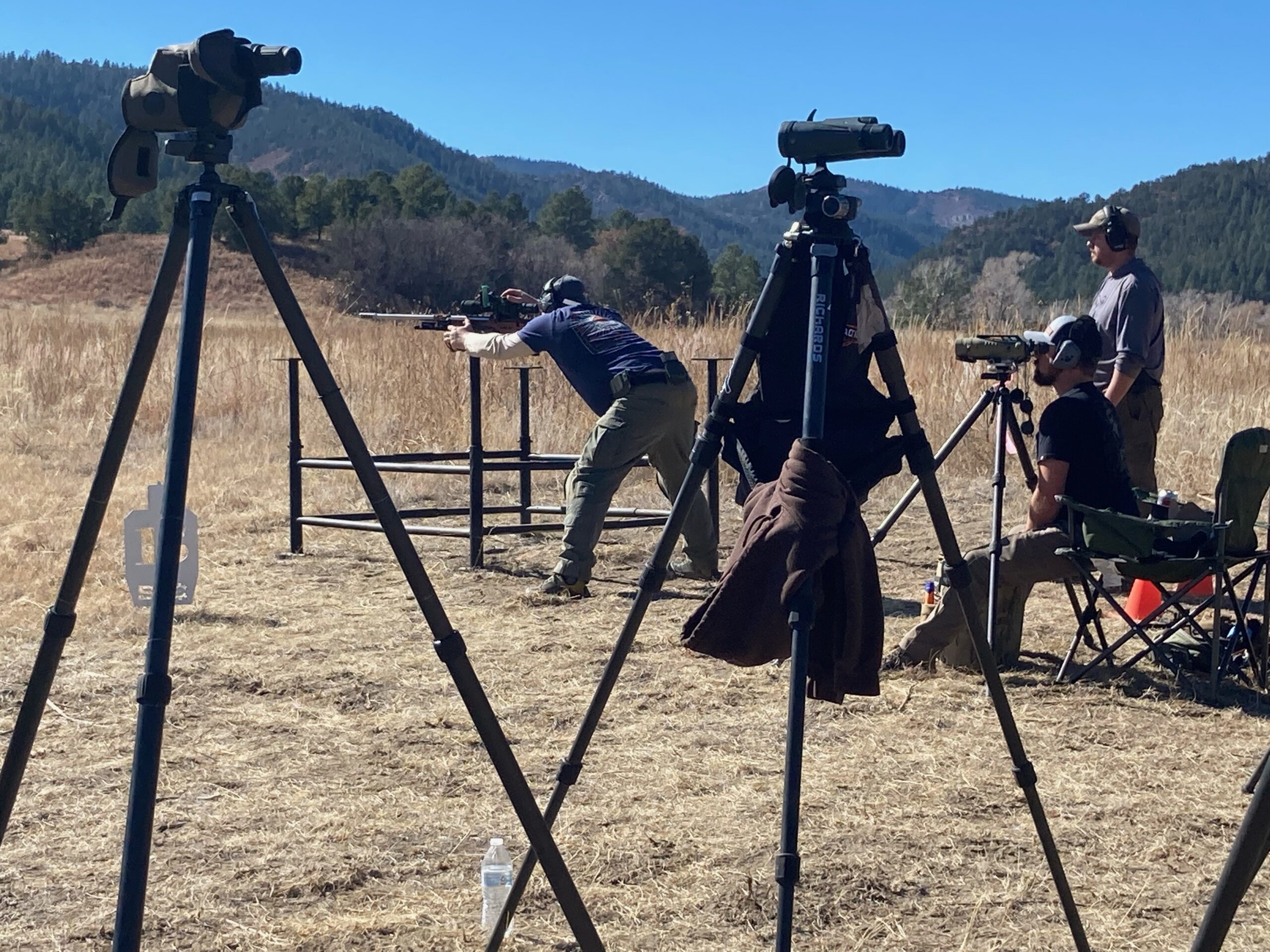
A centerfire match rifle benefits from enough mass and the right balance to settle on bags, barricades, and other support without constantly wanting to tip or roll. More weight can reduce movement and soften what the shooter sees through recoil, but too much weight—or weight in the wrong place—slows transitions and makes awkward positions harder.
Head and shoulder position: a consistent cheek, shoulder, and grip relationship reduces the small corrections the shooter has to rebuild every time the position changes.
Balance: when the rifle sits neutrally on support, the shooter uses less muscle to keep it from tipping or rolling, but the overall weight still has to move through the stage.
Operation: smooth, predictable cycling lets the shooter stay behind the rifle instead of disturbing position to run it.
Recoil: a rifle that returns more predictably through recoil makes it easier for the shooter to stay in the optic and see the result instead of recovering from the rifle first.
Precision .22 LR keeps the positional, timing, wind, and stage-management problems that make precision competition difficult while removing most recoil and much of the ammunition expense. That makes it practical to shoot more stages, repeat drills, and diagnose technique without spending the same time loading ammunition between sessions.
Position feedback: low recoil makes small position errors easier to see.
Wind: at extended rimfire distances, small wind changes become significant and teach the shooter to read conditions carefully.
Volume: lower ammunition cost and no routine handloading make frequent practice more realistic.
Competition crossover: PRS Rimfire, NRL22, and NRL22X use positional and time-pressure problems that reward many of the same habits used in centerfire precision competition.
A hunting rifle can spend hours being carried for a few seconds of shooting. That changes the tradeoffs. The rifle needs enough stability to help from a real field position without becoming something the hunter resents carrying before the opportunity arrives.
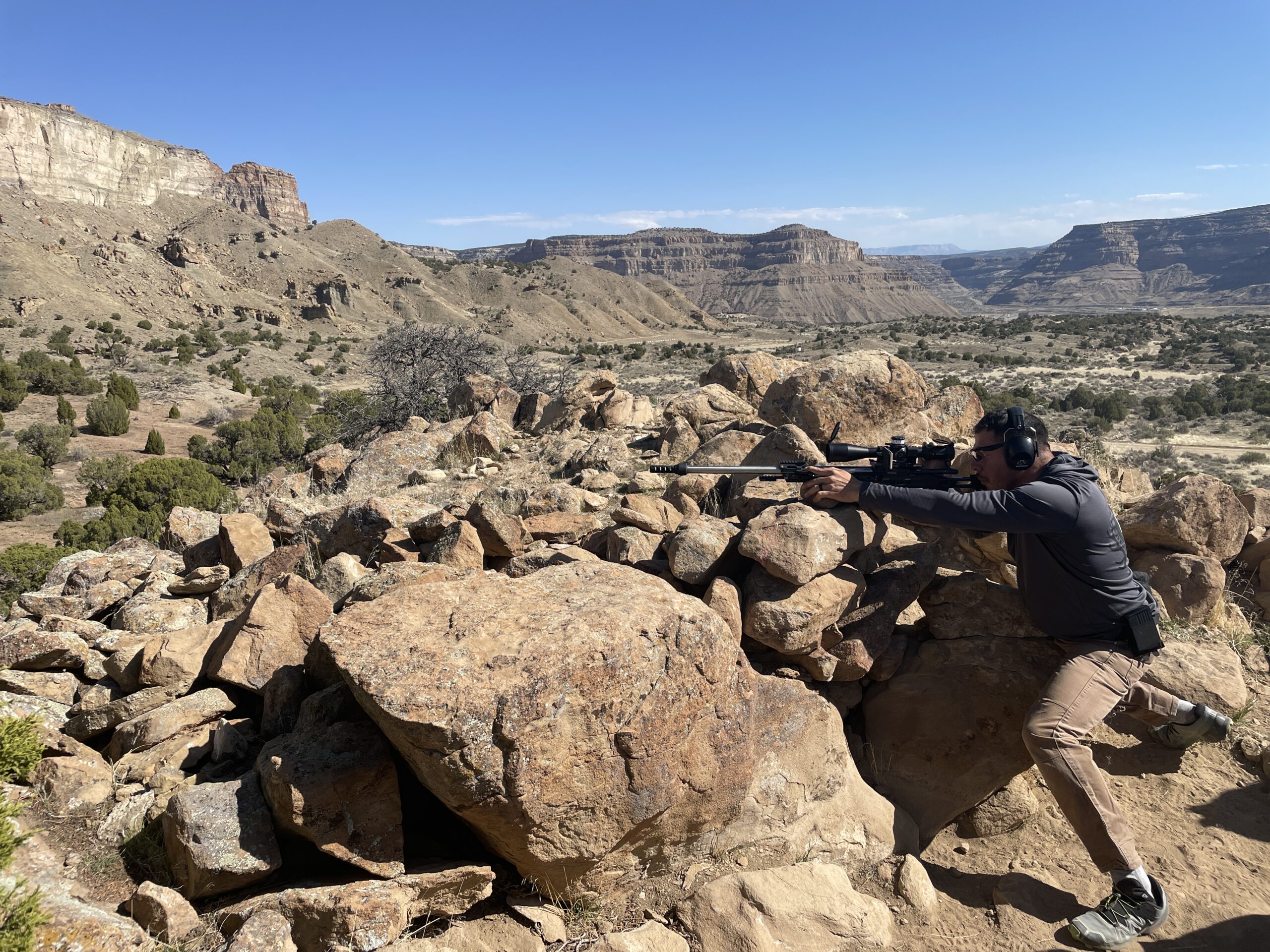
Removing weight makes a rifle easier to carry, but less mass can make it more sensitive to imperfect support and more active through recoil. Adding weight can make the rifle calmer from a supported position, but every ounce is carried long before it helps on the shot.
Weight vs. stability: lighter is easier to carry, but the rifle still has to be controllable and stable enough for the intended use.
Balance: where the rifle carries its weight can matter as much as the total number on the scale; a neutral-feeling rifle is easier to bring onto support without fighting the muzzle or buttstock.
Reliability: controls, feeding, and cycling need to stay predictable when the shooter is working from field positions and less controlled conditions.
Confidence: a rifle that comes naturally to the shoulder takes less adjustment when the shot window is short and the position is not ideal.
Where lawful and appropriate, rimfire can serve small-game, field, recreational, and training roles. Low recoil lets the shooter pay close attention to position, follow-through, and how the rifle behaves without the physical interruption of a centerfire shot.
Practical fit: a rifle that fits the shooter is easier to use from natural positions.
Repeatability: a consistent action-to-stock or chassis relationship still matters even when recoil is modest.
Balance: a rimfire system can be optimized around carrying, training, competition crossover, or a specific field role.
Confidence: lower recoil can make it easier to observe technique and build familiarity.
THE POSITION COSTS LESS EFFORT — Better fit and balance reduce how much muscular correction the shooter needs to keep the rifle where it belongs.
THE RIFLE GIVES CLEARER FEEDBACK — Predictable recoil and movement make it easier to see what happened after the shot instead of guessing whether the rifle or shooter caused it.
OPERATION BECOMES A BACKGROUND TASK — When cycling, feeding, controls, and the shooter interface behave consistently, more attention can stay on the target, wind, stage plan, or field situation.
THE TRADEOFFS MATCH THE JOB — Weight, balance, carry, stability, accessory compatibility, and recoil are rarely maximized at the same time. A tuned rifle chooses which compromises matter for the way it will actually be used.
Competition or hunting. Centerfire or rimfire. The project starts by defining the job and starting point first.